The Unedited Truth: Why a Chaotic Clip Says More About Our Own Prejudices Than Any Community
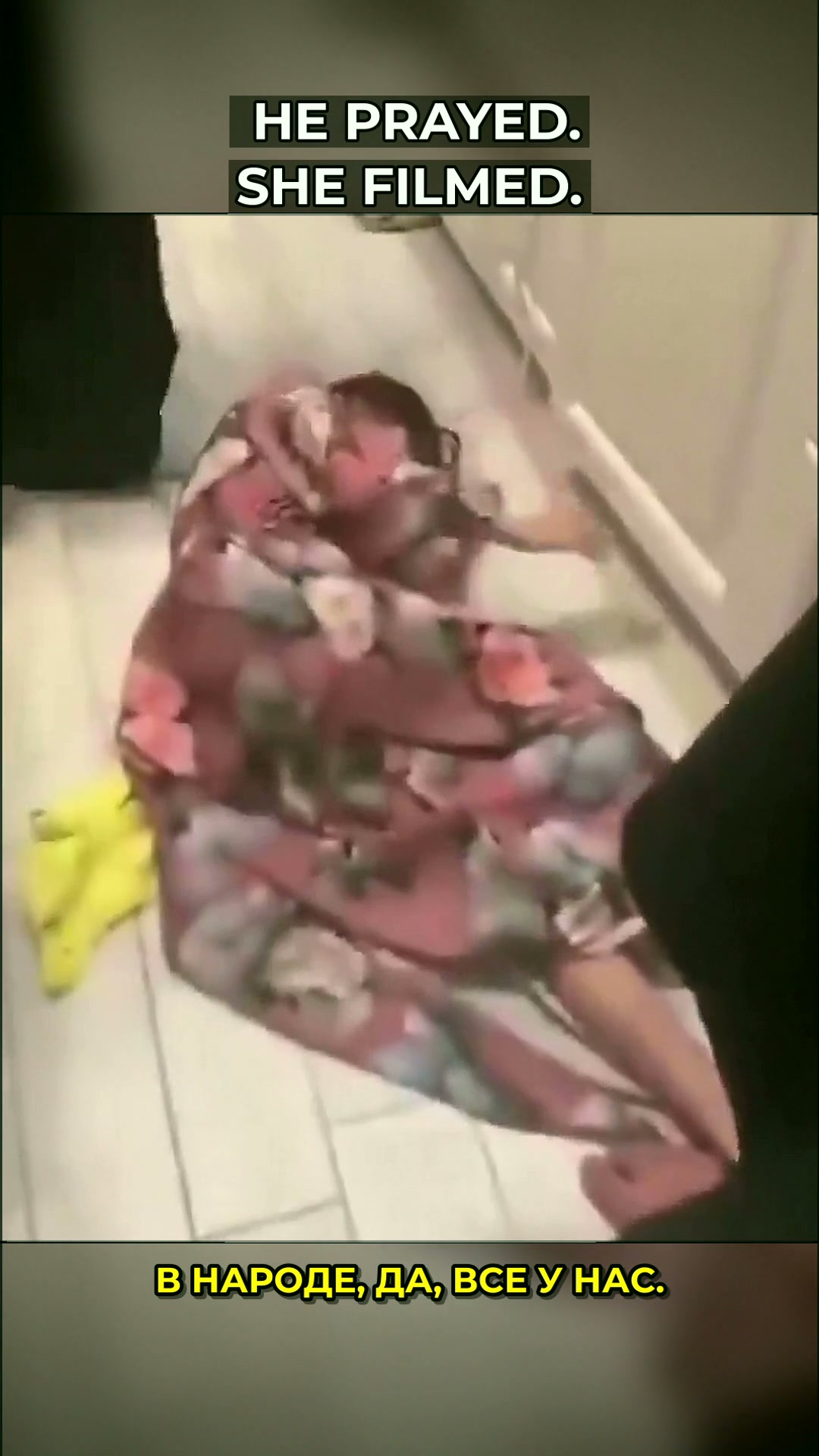
One blurry video, a loaded caption, and the dangerous shortcut our brains take when we stop asking questions.
- A single out-of-context clip is being weaponized to smear an entire faith, yet the video itself reveals nothing but noise and confusion.
- Behavioral psychology shows we are wired to accept stereotypes when emotions run hot, bypassing our natural common sense.
- The real crisis isn’t the behavior in the video—it’s the instant willingness to believe the worst about people we don’t know.
Stop for a second. Scroll back up. Look at that caption again. It screams certainty. It screams absolute knowledge about millions of people based on a grainy, chaotic few seconds of footage. And that is exactly the problem.
The clip circulating online is a mess. Raised voices, a language barrier, a blur of motion—nothing that provides a coherent story. Yet the text slapped on top of it delivers a verdict: “This is what Islam and Muslim men are really like.”
Really? From this? That is not analysis. That is a reflex. And it is a dangerous one.
The Human Story Buried in the Noise
Here is the part the viral post does not want you to see. Behind the shaky camera and the shouting, there are real people. People with bad days, with frustrations, with complicated lives. They are not archetypes. They are not representatives of a global faith. They are just humans, being messy.
But that does not fit the narrative. The narrative requires a villain. It requires a face for fear. And so, a random dispute—the kind that happens on any street in any town—becomes evidence of something it is not.
“We are so quick to judge a whole community based on a five-second clip, yet we would never accept the same standard applied to our own neighborhood.”
Consider what is missing. Context. History. Language. The video transcript is in Russian. Who are these people? What happened before the recording started? What happened after it stopped? You do not know. The person who shared it does not know. And that lack of knowledge is the fuel for this fire.
The Psychology of the Viral Trap
Why does this work? Why do we share it? Behavioral psychology offers an uncomfortable answer: our brains take shortcuts when we feel threatened. A provocative caption triggers an emotional response before our critical thinking can catch up. It bypasses the part of us that asks, “Wait, is this true?”
This is the opposite of accountability. This is the opposite of justice. It is a rush to judgment with zero evidence, and it corrodes the very fabric of community trust. When we accept a stereotype, we stop seeing individuals. We stop seeing the human story. We see only a label.

The Real Threat to Your Daily Life
This is not an abstract debate about foreign policy. This is about your neighbor. Your coworker. The parent you see at school pickup. If we allow these viral hit pieces to define how we see each other, then no one is safe. The mechanism is simple: find a clip, add a caption, watch the outrage grow. Today it is a Muslim man. Tomorrow it could be a veteran, a teacher, or a stay-at-home mom.
That is the unedited truth. We are all one out-of-context video away from being judged by strangers who have never met us.
So what do we do? We pause. We demand more than a caption. We remember that common sense and basic respect are not optional extras in a functioning society—they are the foundation. And we refuse to let a chaotic, meaningless clip define the value of an entire community.
The Sobering Reality
The video ends. The shouting fades. But the smear remains, shared thousands of times, embedded in the minds of people who will never fact-check it. The people in the clip have likely moved on with their lives, unaware that they have become pawns in a culture war they never signed up for.

And that is the most unsettling part of all. They do not know they are being used. They do not know their worst moment is being broadcast as their permanent identity. And we—the viewers—are left with a choice. Accept the easy lie, or demand the hard truth.
The caption asks a question. “Isn’t it…?”
The answer is no. It is not. And the fact that so many people are willing to believe it without a second thought is the only real scandal here.
