The Moment Everyone Saw the Wrong Man Walk Away — And What It Says About Justice in Modern Britain
When a public dispute turns into a spectacle of selective enforcement, the real question becomes: who is actually protecting the peace, and who is just picking a side?
- Eyewitness video captures a chaotic dispute where the initial aggressor appears to avoid detention while the other party is restrained.
- The incident raises uncomfortable questions about how local authorities assess blame in the heat of the moment versus on camera.
- Community accountability depends on transparent legal follow-through and clear resources for those who feel wrongly targeted.
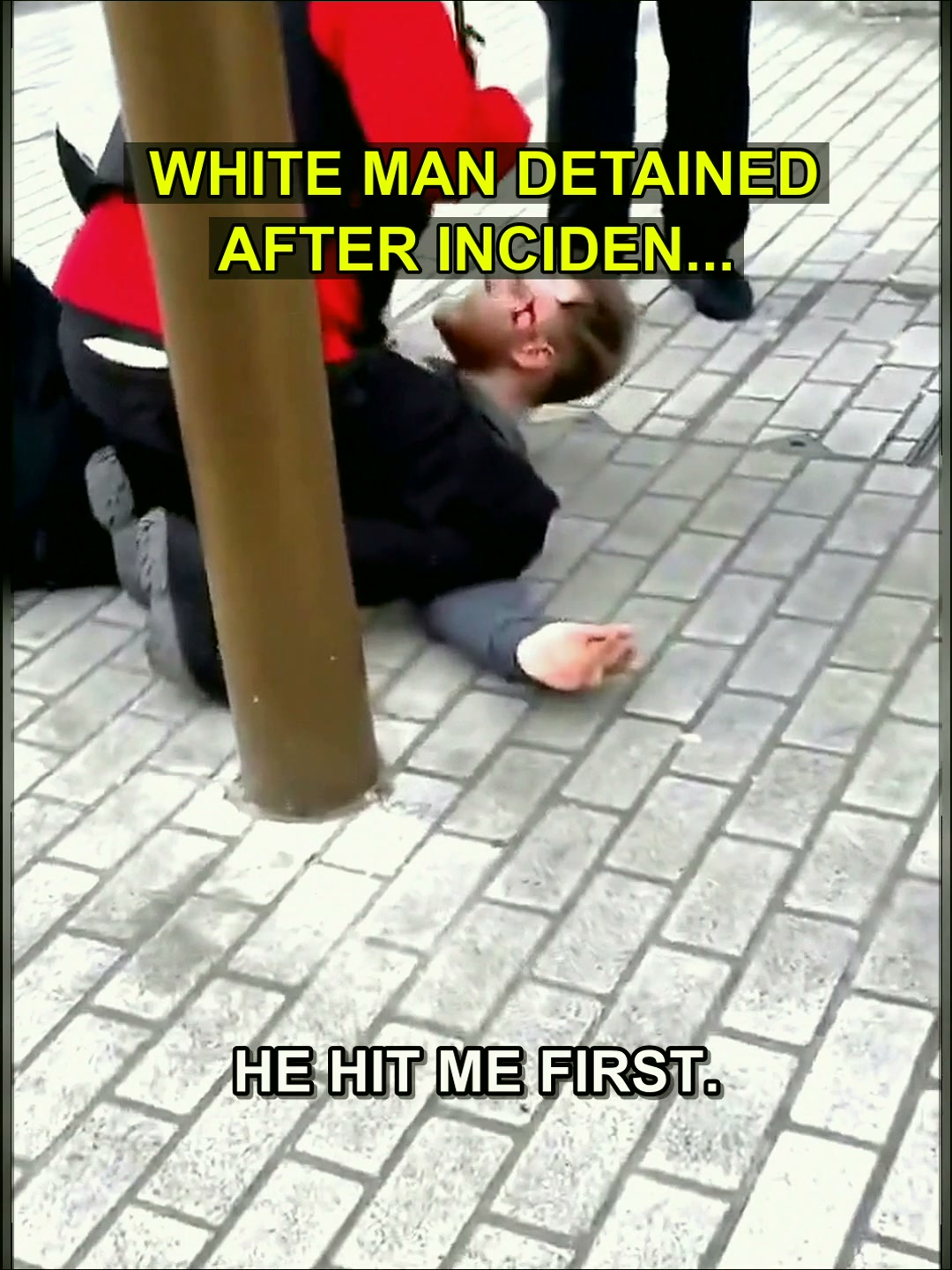
Picture this: you are standing on a busy London street, caught in a shouting match that just turned physical. The other person lunges first. You react. Then, in a blur of uniforms and radio static, it is your arms being pinned. Your legs are being weighed down by an officer who looks like they have not seen a gym in a decade. And the person who started it? They are standing there, arms crossed, watching you get treated like the villain.
That is exactly what unfolded in a now-viral clip from the heart of the UK capital. The footage shows a dispute between two men, one Black and one White. The White man is heard pleading, “He hit me first. Promise me, man. He hit me first.” But the response from the officer on scene is chilling: “You resist me again.”

The visual is jarring. A heavier-set officer lowers themselves onto the legs of the man who is already on the ground, face down. Meanwhile, the other individual, the one accused of throwing the first punch, is not being restrained. He is not being handcuffed. He is not being sat on. He is merely a spectator to his own alleged crime.
The Optics of Enforcement: Who Gets Believed?
Let us be brutally honest about what this looks like. In a society that claims to treat all citizens equally under the law, the visual of a White man being physically subdued while the person he accuses of striking him stands free is a powder keg. It feeds a growing perception among everyday Britons that the system is not blind. It is selective.
The man on the ground is not some hardened criminal. He is a regular person who, by his own frantic account, was the victim of an initial strike. His voice cracks with desperation as he repeats, “He saw it and hit me first.” But the authority figure is not listening. The officer is locked into a narrative of control: “You resist me again.”
“He hit me first. Promise me, man. He hit me first.”
This is not about race-baiting. This is about pattern recognition. When the person who throws the first punch is allowed to stand and observe while the responder is tackled, the message sent to the public is chilling: your defense does not matter if you do not fit the preferred profile of a victim.
The Legal Precedent: What Happens After the Camera Stops?
The uncomfortable truth about incidents like this is that the viral moment is only the opening scene. The real drama unfolds in police stations, interview rooms, and court dockets. For the man who was restrained, the immediate aftermath involves allegations of resisting authority, a charge that can escalate a simple dispute into a criminal record.
Meanwhile, the alleged initial aggressor walks away. Unless there is independent witness testimony or clear CCTV footage that contradicts the narrative established at the scene, the case often becomes a “he said, he said” mess. And in that mess, the person who complied with the officer’s physical takedown is often the one left holding the legal bag.
Community accountability demands a follow-through that does not end at the curb. It requires body-worn camera footage to be reviewed by supervisors who were not sweating in the moment. It requires a genuine investigation into who threw the first punch, not just who was loudest in resisting the restraint.
- Citizens who believe they were wrongly detained can file a formal complaint with the Independent Office for Police Conduct (IOPC) in the UK.
- Legal aid clinics and community law centers offer free initial consultations for individuals facing charges stemming from public disputes.
- Documentation is critical: request all body-worn camera footage and incident reports immediately through subject access requests.
The Mayor, The Politics, and The Uncomfortable Question
It is impossible to separate this incident from the political earthquake rumbling beneath London’s streets. The city’s leadership, often criticized for prioritizing diversity rhetoric over public safety, faces a growing backlash from citizens who feel abandoned by a justice system that seems to protect newcomers at the expense of native-born residents.
The video has ignited a firestorm online, with many pointing to the Mayor’s office and national leadership as complicit in fostering an environment where such selective enforcement is tolerated. The anger is not just about one man on the ground. It is about a perceived hierarchy of victimhood that determines who gets sympathy and who gets a knee on their back.
But stepping back from the political fire, the core issue remains a human one. A man says he was hit. The person who hit him is free. The man who says he was hit is being physically dominated by the state. Whether you are on the left or the right, that image should disturb you. It should disturb you because it suggests that the initial report is not what matters. What matters is who the officer decides is the aggressor in the chaos of the moment.
And once that decision is made, the machinery of the legal process grinds into action to justify the officer’s use of force, rather than to find the truth. The man on the ground is now a “resistor.” His claim of being struck first is buried under the weight of an officer’s body and a charge sheet that paints him as the unhinged party.
The other man? He walks. He walks because he did not resist. He stood still, let the authorities do their work, and allowed the system to swallow up the wrong person. That is the unedited truth of what happens in the gap between a punch thrown and a report filed.
The video ends with the man on the ground still pleading his case. The officer is unmoved. The onlookers are shouting. And somewhere in the background, the alleged aggressor is already fading into the London crowd, knowing that the system has chosen its side. The question that lingers, long after the clip stops playing, is whether any supervisor will watch this footage and ask the one question that matters: did we get the right guy? Or is accountability just another word for whatever the officer on the scene decides it means?