The Moment the Door Came Down: One Woman’s Home Becomes the Front Line in a High-Stakes Dispute Over Public Order
When private residences become the stage for public policy battles, the line between lawful procedure and raw power gets dangerously thin.
- The operation targeted individuals linked to planned disruptions of summer travel infrastructure, highlighting the aggressive tactics used to prevent economic shutdowns.
- Legal experts are questioning the proportionality of removing a suspect from their residence for non-violent protest-related offenses, raising concerns about due process.
- Community accountability and victim support networks are stepping in to address the psychological toll of such dramatic early morning operations on families and neighborhoods.
Imagine the sound of heavy boots on your porch before sunrise. The slam of a fist against your door. The shock of seeing uniformed figures fill your hallway, demanding you come with them—now. For one woman, this wasn’t a nightmare. It was her Tuesday morning.
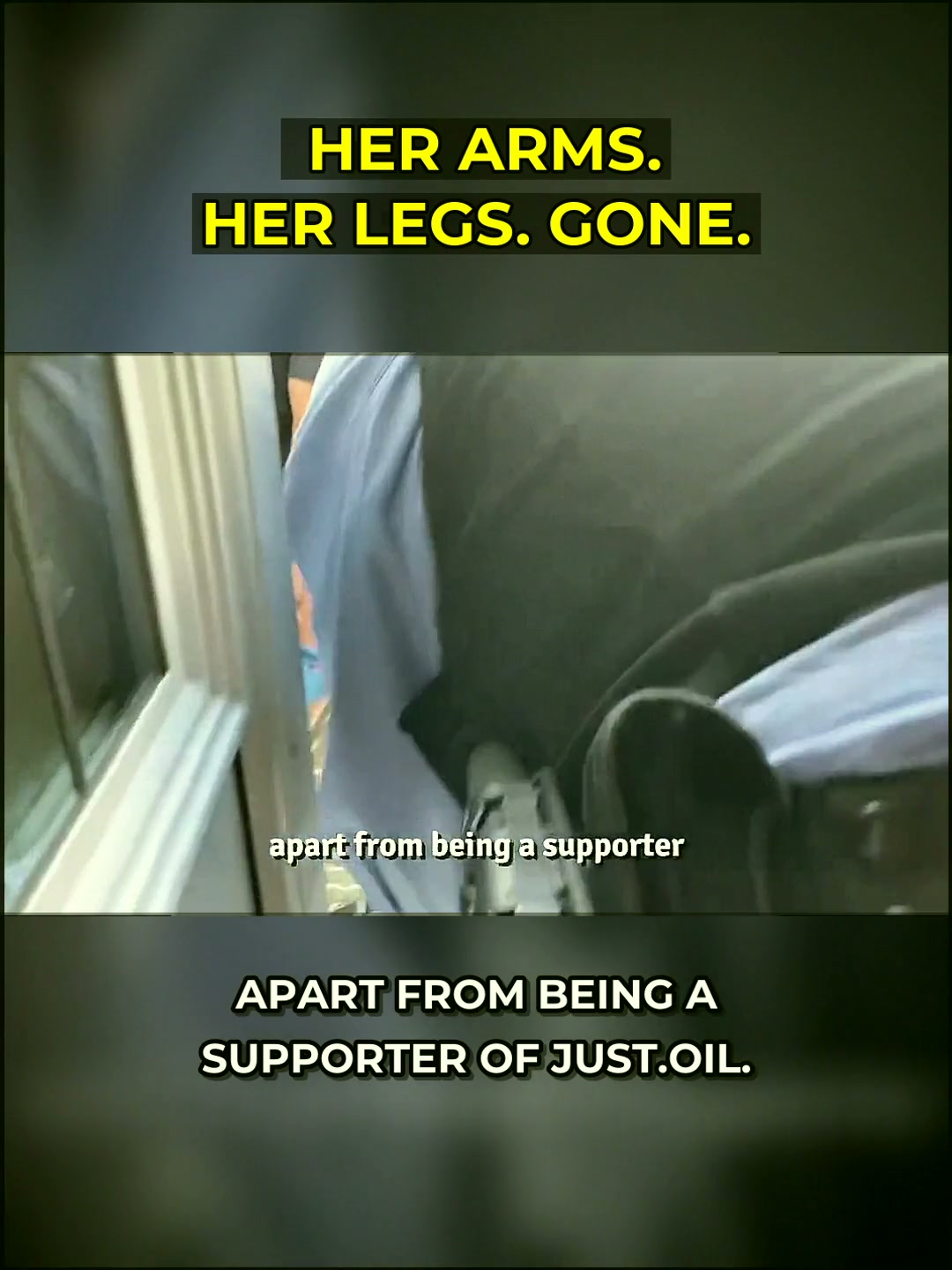
The scene, captured on video and shared across social media, shows the activist being lifted and carried out of her residence by her limbs as she repeatedly insists she has committed no crime beyond her affiliation with the environmental group Just Stop Oil.
“This is my home. You cannot come to my home and arrest me,” she pleads, her voice a mix of disbelief and defiance. The officers proceed regardless, a stark illustration of the state’s authority clashing with an individual’s sanctuary.

The Legal Precedent: Where Does the Line Get Drawn?
This isn’t a random act of aggression. It’s a calculated piece of a larger strategy. Authorities had signaled their intent to prevent widespread disruption at UK airports and major travel hubs throughout the summer. The pre-dawn raids are the enforcement arm of that strategy—a message broadcast not just to this one woman, but to every potential protester watching.
But here is where the common sense meter starts to bend. The woman in the video is not accused of damaging property or inciting violence. Her alleged crime, based on the footage, is being a supporter of a group that plans to slow down traffic. The response was to physically extract her from her private dwelling.
Legal analysts point out that the authorities are using public order legislation to justify actions that look more like they belong in a script for a dystopian thriller. The chilling effect is undeniable. If supporting a cause makes you a target for a home invasion by the state, what does that mean for the rest of us who sign petitions or attend rallies?
The video ends with the activist being placed in a vehicle. We don’t see the booking process, the holding cell, or the look on her face when she realizes her morning coffee will be going cold in a station interview room. We are left with the image of a person being treated like cargo.
“I’ve not done anything wrong, apart from being a supporter of Just Stop Oil.” — The activist, moments before being removed from her home.
The Aftermath: What Justice Looks Like for Those Dragged Into the Spotlight
Let’s be brutally honest here. For the average person watching this clip, the reaction is visceral. It triggers a primal fear of losing control over your own front door. The sanctity of the home is one of the few remaining bastions of privacy we have left. When that is violated with such clinical efficiency, it shakes the foundation of the neighborhood.
In the days following the operation, the focus shifts from the dramatic arrest to the slog of the legal process. This woman is now a named figure in a national debate. Her face is attached to a movement she supports. Her neighbors are left to pick up the pieces, wondering if their street is now a target for future operations.
Community accountability cuts both ways. While some residents might be relieved that potential travel chaos was averted, others are deeply concerned about the escalation of tactics. This isn’t about whether you agree with the protest group’s methods. It’s about whether you agree with the state treating citizens like this in their own living rooms.

For those who find themselves on the wrong side of such a large-scale operation, the resources are often scarce. Legal aid is stretched thin. The psychological impact of being manhandled in your own home can linger for years. Victim support groups, typically reserved for those affected by burglary or assault, are now seeing a new demographic: political activists who never expected the knock on the door to come with such force.
The question of “who watches the watchers” is no longer abstract. It’s playing out on front lawns and in body-worn camera footage. The unedited truth is that this operation was executed with precision, but the justification for it remains wobbly at best.
The Ripple Effect on Ordinary Citizens
Do not make the mistake of thinking this only affects the person in the video. This is about the precedent being set for every home in the nation. If the threshold for a pre-dawn raid is “we think they might plan to inconvenience travelers,” then the bar has been lowered to the floorboards.
The fear is that this becomes normalized. That we start to accept aggressive enforcement as a standard tool for handling policy disputes. And that is where the real danger lies. Not in the protest itself, but in the overcorrection.
This event should force a moment of reflection. Not just about climate policy or travel infrastructure, but about the fundamental balance of power between the individual and the apparatus of the state. When the system fails to protect the vulnerable, the community steps up. But who steps up when the system itself is the one doing the dragging?

The car door slams shut. The engine starts. The street falls silent again. But the silence is deafening for those who just watched a piece of their security being carried away with the woman in handcuffs. This story doesn’t end with a conviction or a release. It ends with a deep, unsettling question hanging in the air of every quiet cul-de-sac: If they can do this to her, what stops them from doing it to you?