The Unseen Price of a Loud Opinion: One Man’s Life Erased in a Single Birmingham Night
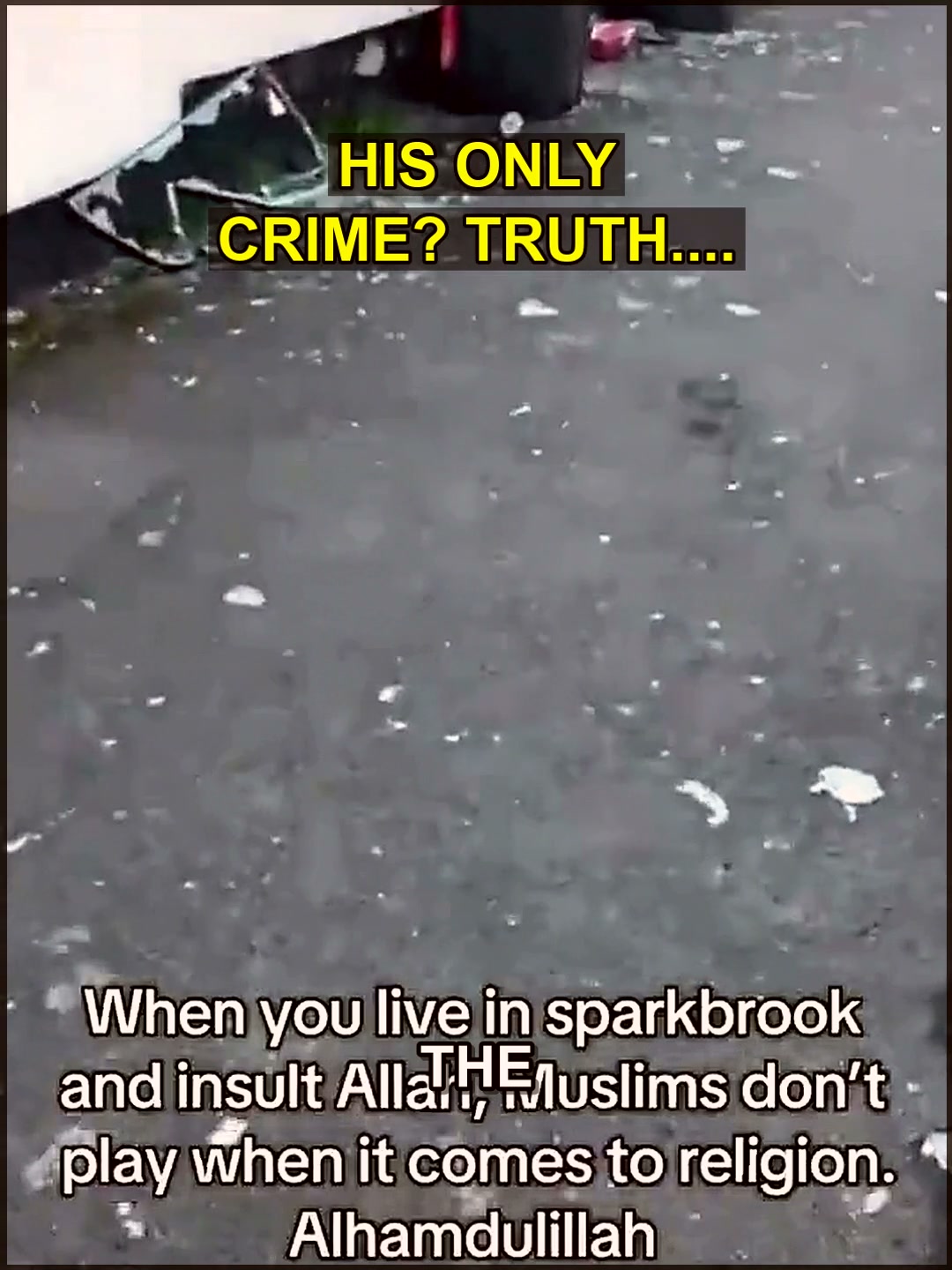
When expressing a personal view on religion turns into a nightmare of fire, rubble, and a life on the run.
- A British citizen is now effectively homeless in his own country after his outspoken views were met with extreme vandalism and arson.
- The incident in Birmingham highlights a chilling reality: that holding an unpopular opinion can lead to immediate, life-altering consequences.
- This case serves as a focal point for debates on freedom of speech, community safety, and the limits of religious sensitivity in the UK.
Imagine standing on your own street, watching the smoke rise from what used to be your family car. The metal is twisted, the paint is blistered, and the windows of your home—the place where you sleep, eat, and live—are shattered like thin ice. This isn’t a scene from a dystopian movie. For one British man in Birmingham, this became his reality on an otherwise unremarkable day, simply because he voiced a personal opinion about a religion.
The man, whose identity remains shielded for his own safety, dared to look at Islam and declare that he did not believe it was a religion of peace. In the span of a few hours, his life was dismantled piece by piece. The retaliation was swift, brutal, and utterly disproportionate. The message was clear: in this neighborhood, certain words are not permitted to be spoken aloud, regardless of the law that supposedly protects them.

### When Disagreement Turns to Destruction
Let’s be clear about what happened here. This wasn’t a debate. There were no town hall meetings, no open letters, no intellectual arguments exchanged. Instead, the response to a verbal critique was physical annihilation. The vandals didn’t just scratch the paint or break a window; they systematically destroyed his property and his sanctuary. They sent a message so loud and so terrifying that it forced a citizen to flee his own address, leaving behind everything he owned.
The psychological toll of this cannot be overstated. To know that your neighbors—or whoever carried out this act—hate you enough to burn your possessions is a specific kind of terror. It is the feeling of being completely unprotected in the very place where you are supposed to feel safest. This man is now looking over his shoulder not because he committed a crime, but because he exercised a freedom that many Britons take for granted.
“He will probably never be able to live in his home again. The fear is not just about the damage; it is about the certainty that they will come back.”
### The Legal Precedent and the Uncomfortable Truth
We often hear that the UK has strict laws protecting free speech. In theory, this is true. But theory does not pay for a new car, nor does it repair a shattered front door. The reality on the ground is that if the mob decides you have crossed a line, the law often becomes a secondary concern. The police can investigate, and the courts can prosecute, but the fear that grips a victim in the middle of the night is not alleviated by the promise of future justice.
This situation forces a community to look inward. Is this the kind of society where disagreement is met with fire? The silence from the broader community following such an event is often the loudest sound of all. It echoes a sentiment that many are thinking but few are willing to say out loud: that some topics are simply too dangerous to touch, even with the full protection of the state behind you.

### The Hidden Cost of Speaking Up
The aftermath of this incident leaves a lingering question for every ordinary citizen watching from the sidelines: What would I do? Would I speak up if I knew my car might be next? This man’s story is not just a tragedy for him; it is a warning to everyone else. It demonstrates that the penalty for non-conformity in certain areas of the UK is not social ostracism—it is arson and forced relocation.
He is now in hiding, a ghost in his own city. He trades his freedom to move about for the safety of anonymity. The irony is sickening. He is the victim, yet he is the one living in fear. He is the one who has lost everything, while those who committed the act of intimidation likely went back to their homes, made a cup of tea, and watched the news of their handiwork unfold.
“The true tragedy is that he will never know if the person living next to him was the one who lit the match.”
### A Community at a Crossroads
This event in Birmingham is a stress test for the concept of tolerance. Tolerance is often preached as a one-way street: you must tolerate everything and everyone. But when tolerance is not reciprocated, and when the response to a differing viewpoint is violence, the social contract begins to fray. The man in this story is not a politician or a provocateur; he is a resident who had a view. His life has been effectively ended in the community he called home.
### The Unanswered Question
As he remains in hiding, the question hangs in the air: who is next? Is it the person who agrees with him but stays quiet? Or is it the one who finally decides that silence is complicity and speaks out? The authorities may classify this as a hate incident, but for the man looking at the charred remains of his life, the labels don’t matter. What matters is that he is gone, and the message has been sent.
The rubble will be cleared, and the street will eventually look normal again. But the stain on the community, the knowledge of what happened to a man who just spoke his mind, will linger far longer than the smell of smoke. He wanted to say his piece. He just didn’t realize he would have to lose everything to say it.