The Price of a Spine: Why Starmer’s Refusal to Bow Is Rattling the Special Relationship
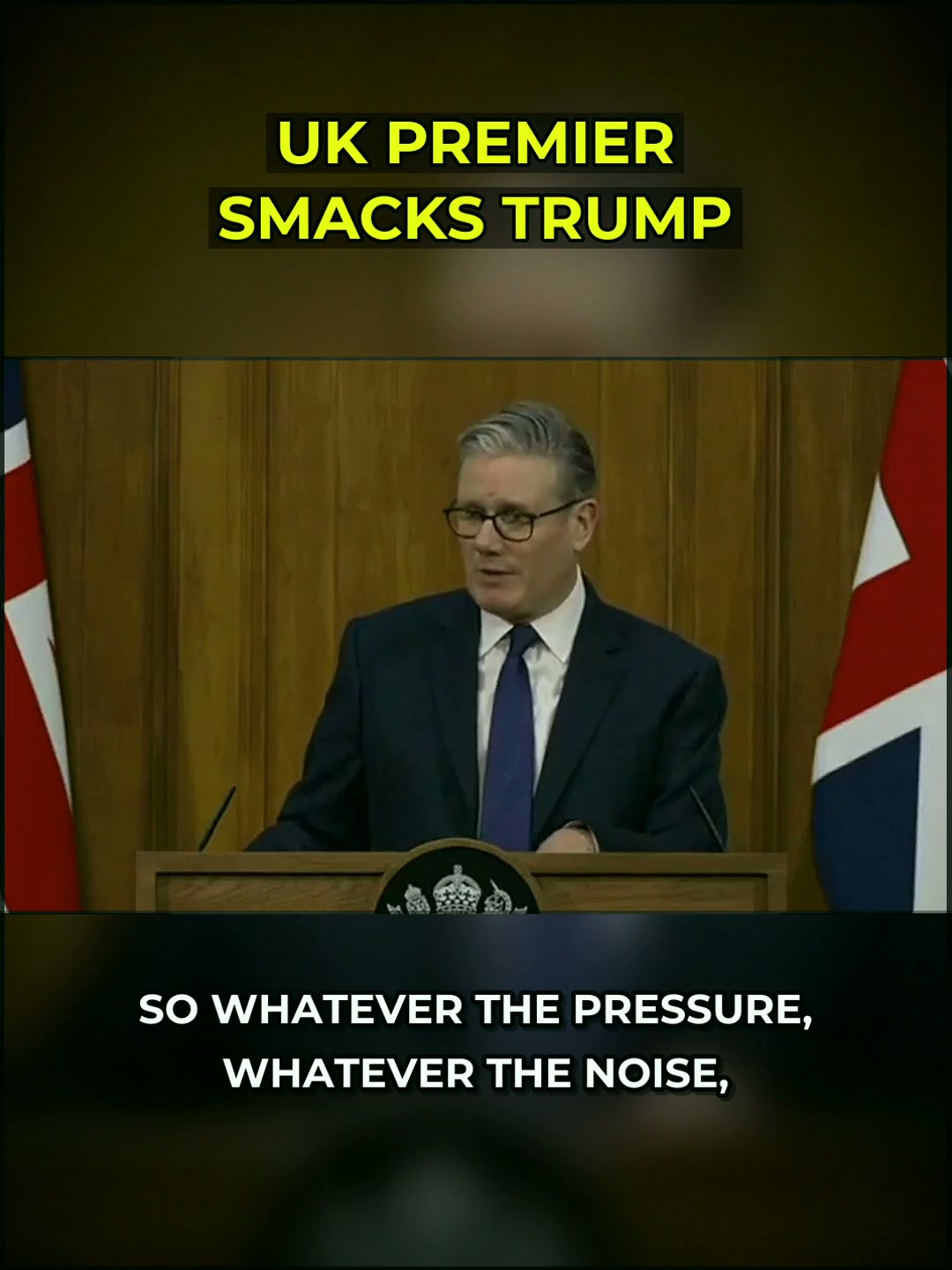
Facing intense pressure from across the Atlantic, the British Prime Minister draws a hard line in the sand. The question is no longer about loyalty, but about who truly holds the cards when national interest collides with alliance expectations.
- Downing Street signals a decisive shift toward prioritizing domestic sovereignty over diplomatic harmony.
- The “special relationship” faces its most public stress test in decades, hinging on a single policy decision.
- Starmer’s language indicates a new playbook for handling transatlantic pressure: polite, firm, and utterly immovable.
The carefully curated image of the “special relationship” cracked just a little wider this week. It wasn’t a diplomatic leak or a back-channel memo that did it. It was a direct, public question lobbed at the UK Prime Minister: What happens when the United States threatens to pull its support? The answer, delivered without a flicker of hesitation, was a masterclass in diplomatic defiance.

“Won’t change my position,” he stated flatly. “I serve British national interest. Whatever the noise.”
Let that sink in. For years, the default setting for leaders on the world stage has been to placate, to reassure, to smooth over cracks in the transatlantic alliance. This was not that. This was a line drawn in the sand, a declaration that the compass pointing to London no longer automatically swings toward Washington when the pressure mounts.
The “Noise” He’s Ignoring
It is incredibly frustrating to see people act like the rules don’t apply to them, especially on the global stage. But here, we are seeing the inverse. We are seeing a leader accused of ignoring the rules of the old world order, where junior partners are expected to fall in line when the senior partner leans on them.
The reporter’s question was blunt: How seriously do you take the threat that the US will no longer back the UK? The subtext was clear. This wasn’t about trade deals or diplomatic pleasantries. This was about a fundamental shift in the balance of power, a warning shot fired across the bow of British foreign policy. And Starmer essentially looked down the barrel and said, “Fire away.”
His follow-up comment, acknowledging the close work on defense, security, and intelligence, was the diplomatic equivalent of a pat on the back. It acknowledged the relationship exists. But the preceding statement had already defined its limits. It signaled that cooperation is not submission.

Why This Feels Different
This isn’t just political banter. This is a sobering reminder of why you should always document everything and stand by your principles, even when the cost is high. The pressure, as Starmer admitted, has been immense. He explicitly stated there has been “a good deal of pressure” to change his position. Yet, he is holding firm.
Common sense and basic respect are truly disappearing these days in diplomatic circles, where might often makes right. But here, Starmer is attempting to recalibrate the scale. He is arguing that sovereignty is not a favor granted by a superpower, but an inherent right that must be exercised, even when it disappoints an ally. The message is jarring to the establishment because it suggests that the UK is no longer willing to be the loyal deputy, especially when the directive conflicts with its own judgment of its national interest.
“I’m the British Prime Minister and I have to act in our national interests.”
The phrase “whatever the noise” is the detail that will sting in Washington. It categorizes the pressure from the US as just that: noise. It diminishes the gravity of the supposed threat, framing it as a distraction rather than a consequential policy shift. It is a linguistic choice that reveals a deeper confidence, or perhaps a calculated gamble, that the ties that bind the two nations are stronger than a single political spat.

The Legal Precedent of Sovereignty
While the world watches this high-stakes political drama, it’s worth zooming out to the principle at play. This is about the right of a nation to govern itself without external coercion. In the context of workplace rights, we see similar battles played out daily—where an employee is pressured to act against their own ethics or interests for the sake of the “team” or the “boss.”
The dynamic is identical. A power imbalance exists. The stronger party makes demands. The weaker party is expected to comply. But accountability and justice only exist if the weaker party has the right to refuse. Starmer is invoking a form of national workplace rights. He is asserting that no matter how powerful the external entity, the internal duty to one’s own constituents—or one’s own conscience—takes precedence.
He is signaling that the era of unilateral deference is over. Whether this leads to a fracture or a reset of the relationship remains to be seen. But for now, the UK has spoken. The position is clear. The pressure is irrelevant. And the noise? It’s just noise.