The Reckless Crusade of “Loudmouth Lupe”: When Community Theater Collides with Federal Law
A twenty-minute meltdown on a public street reveals a disturbing new trend of performative defiance—and the very real legal consequences that follow.
- A woman’s decision to chase federal agents and warn targets of an active operation is now documented in a viral video, raising serious questions about obstruction of justice.
- The incident highlights a growing cultural divide where performative outrage often eclipses basic respect for law enforcement and due process.
- Legal experts suggest that actions like these can escalate quickly into felony charges, transforming a moment of misplaced passion into a life-altering mistake.
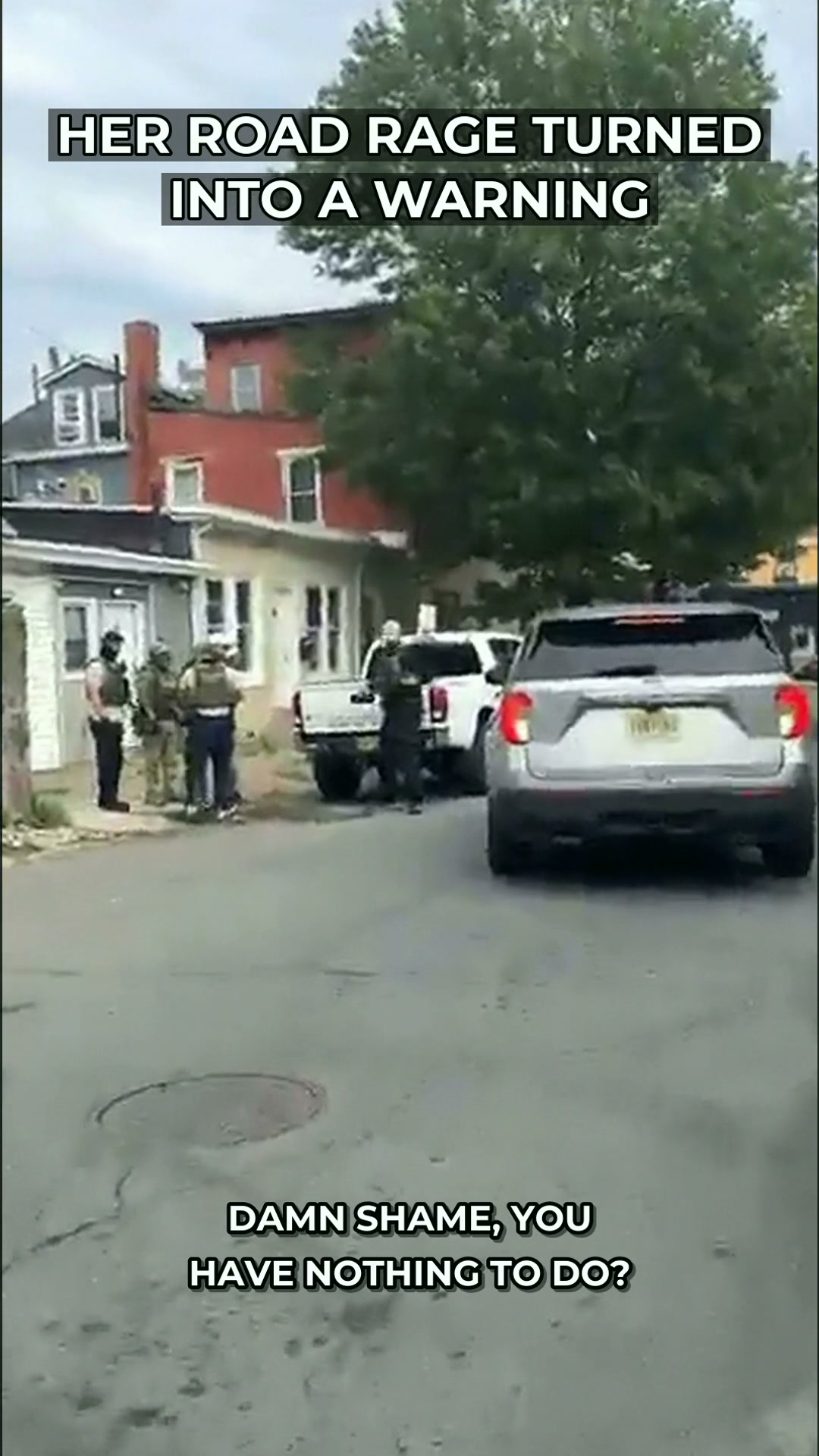
Imagine the scene: a quiet suburban street, the morning sun casting long shadows, and the sudden, sharp screech of tires. A woman, later identified online only as “Loudmouth Lupe,” launches herself from her parked car, phone in hand, and begins sprinting toward a group of federal agents. Her mission? Not to ask questions, but to scream. To disrupt. To warn the very individuals the agents are there to detain.
This isn’t a scene from a Hollywood thriller. This is real life, captured on video, and it is spreading like wildfire across the internet. For twenty relentless minutes, Lupe transforms from a concerned citizen into a self-appointed guardian of the block, chasing an ICE vehicle down the road, honking her horn like a deranged cab driver, and shrieking into the void about “community members.” But in her blind rage, she may have just crossed a line that could land her in a world of legal trouble.
The footage is chaotic, raw, and frankly, embarrassing to watch. At the 0:11 mark, she’s out of the car, already at full volume. By 2:17, she’s tailing the agents, using her vehicle as a makeshift alarm system. By 4:26, she’s practically foaming at the mouth, demanding answers to questions she clearly doesn’t want to hear. “What did he do wrong?” she repeats, over and over, a mantra of ignorance that ignores the basic premise of law enforcement: they don’t need a public audience to do their jobs.
The Unraveling of a Self-Styled Hero
Let’s be brutally honest here. There is a massive difference between peaceful protest and outright obstruction. What Lupe engaged in wasn’t advocacy; it was a spectacle. She wasn’t holding a sign or organizing a sit-in. She was actively interfering with a federal operation, using her car to chase down officers, and screaming at them while they attempted to fatally injure their duties. This is the very definition of reckless behavior.
Common sense and basic respect are truly disappearing these days. It is incredibly frustrating to see people act like the rules don’t apply to them, especially when they’re putting themselves and others at risk. Lupe’s actions weren’t just disrespectful; they were dangerous. By honking and yelling, she was telegraphing the agents’ location to anyone listening, potentially compromising the safety of the officers and escalating a tense situation into a potentially volatile one. This is exactly why our community needs to stay vigilant against such reckless vigilantism.
“You get to go home to your family,” she screams at the agents. The irony is staggering. She’s worried about the families of individuals who are in the country illegally, yet shows zero concern for the safety of the officers she’s actively harassing.
This is the crux of the modern dilemma. We’ve created a culture where outrage is worn as a badge of honor, where the loudest voice in the room is often the most wrong. Lupe’s video is a masterclass in this toxic behavior. She’s not a hero; she’s a cautionary tale. She’s a person so blinded by her own self-righteousness that she can’t see the potential consequences of her actions—for herself, for the people she’s trying to “help,” and for the community she claims to represent.

The Legal Precedent
Let’s talk about the law, because this is where the real drama unfolds. While the First Amendment protects free speech, it does not protect you from the consequences of obstructing justice. Federal law under 18 U.S.C. § 1501 makes it a crime to knowingly obstruct or interfere with a federal officer in the performance of their duties. This isn’t a gray area. Chasing a vehicle, using your horn to warn others, and physically positioning yourself in the path of an operation are all actions that can be interpreted as obstruction.
Beyond the federal statute, many states have their own laws against hindering law enforcement. The penalties can range from misdemeanors to felonies, depending on the severity and whether anyone was harmed or escaped because of the interference. If, hypothetically, an individual Lupe warned managed to evade capture, she could be looking at serious jail time. This is a sobering reminder of why you should always document everything and think before you act. A moment of fleeting social media fame is not worth a permanent suspect record.
The tragedy of this situation is that Lupe’s passion, however misguided, comes from a place of emotional investment in her neighborhood. She sees herself as a protector. But her methods are so aggressively counterproductive that they undermine any legitimate concerns she might have. Instead of engaging in a dialogue, she chose to declare conflict. And in that conflict, she is the only one holding a item of self-destruction.

The Human Story Behind the Screams
Yet, beneath the layers of outrage and legal jargon, there is a deeply human story. This is a story about fear, about the perceived erosion of community, and about the desperate, often clumsy, ways people try to hold onto what they believe is right. Lupe isn’t a cartoon villain; she’s a frightened person reacting to a complex geopolitical issue she likely doesn’t fully understand. Her response is visceral, not intellectual. It’s the reaction of someone who feels powerless and is trying to reclaim a sliver of control in the most dramatic way possible.
The video forces us to ask uncomfortable questions about our own communities. How do we balance compassion for our neighbors with respect for the rule of law? How do we express dissent without descending into chaos? How do we ensure that our desire to protect doesn’t morph into a dangerous act of obstruction? The answers are not simple. They require nuance, empathy, and a level of critical thinking that is often lost in the heat of the moment.
But what is not nuanced is the reality of Lupe’s situation. She is now a viral sensation for all the wrong reasons. Her face is attached to a narrative of hostility and disregard for authority. The internet is unforgiving, and the spotlight is now burning brightly on her. The question is, will she learn from this, or will she double down on her role as the professional rabid responder? The silence after the screaming is often the most telling part.
The agents left. The street is quiet again. But the echoes of her shouts linger, a haunting reminder of a community divided. And for Lupe, the silence might be the most terrifying sound of all, as she waits to see if a knock on her door comes from a neighbor or from an officer holding a warrant for her detain. The show is over, but the curtain hasn’t fully fallen on this unscripted drama.