The 20-Minute 3D Scan That Could Rewrite Your Insurance Claim: A Backpack Just Changed the Rules
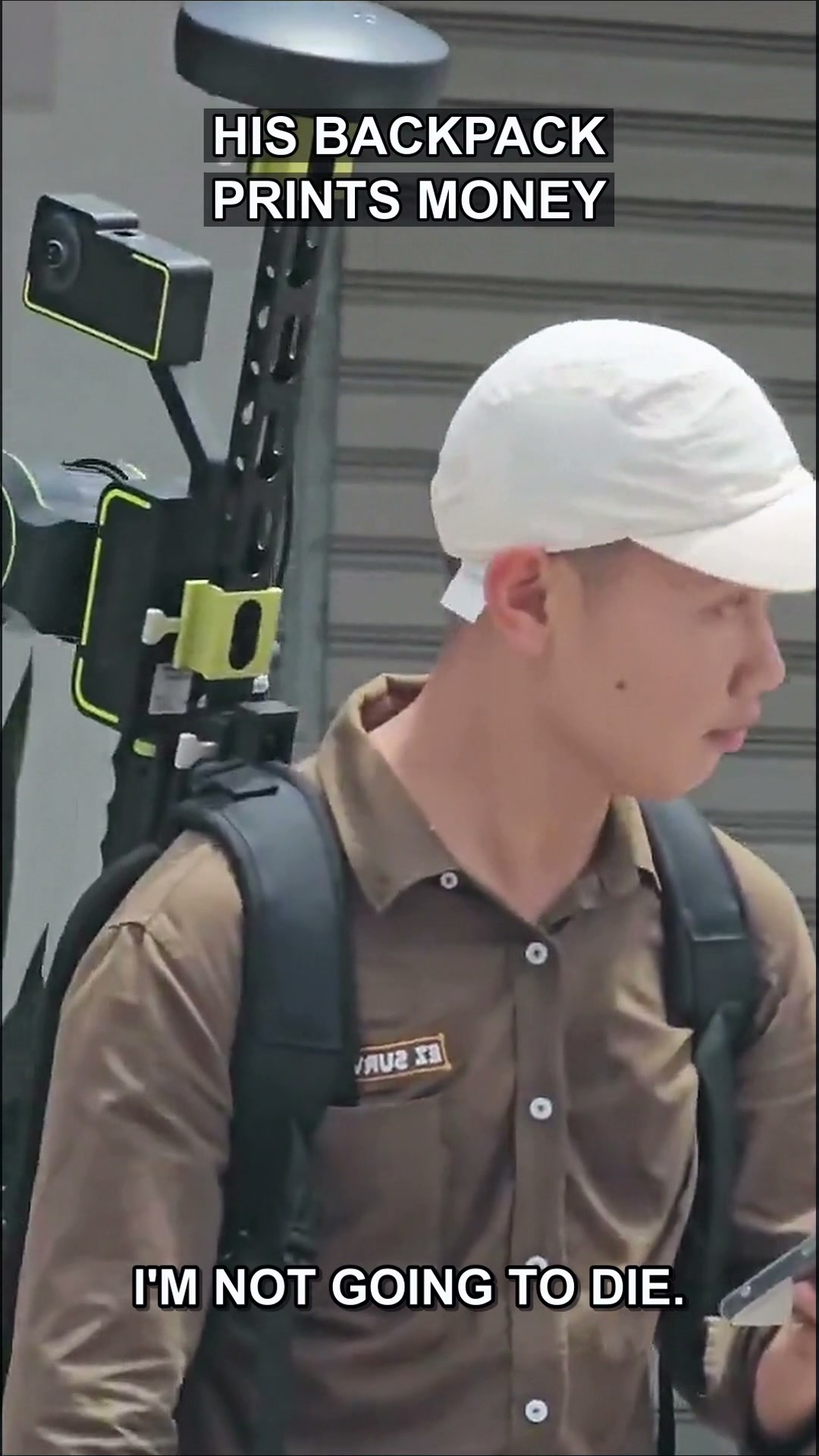
Some kid in China just strapped on a camera rig and turned the real world into a digital twin. While it sounds like a sci-fi gadget, the legal and financial fallout for property owners is just getting started.
- Portable 3D scanning creates an unalterable record of a property’s condition, shifting the burden of proof in insurance disputes.
- Consumers now have access to low-cost, high-detail documentation that can counter fraudulent damage claims or disputed liability.
- Privacy laws are struggling to catch up with technology that can capture every corner of a building without consent.
Imagine this: you are a landlord. A tenant moves out and claims the place was falling apart. They want their deposit back. You know the walls were spotless. You have photos, sure. But they have a lawyer. Now imagine walking into your property with a backpack that, in 20 minutes, creates a perfect, measurable, 3D replica of every scuff, crack, and stain. That is the new reality after a 24-year-old in China strapped on a scanning rig and turned the mundane act of walking into a legal weapon.
This is not a concept. It is working right now. The footage shows a kid moving through hotels, shops, and apartments, and the resulting virtual tour is so sharp you can read the label on a shampoo bottle. The technology is called 3D Gaussian Splatting, and it is about to make “he said, she said” arguments about property damage obsolete.

The Unedited Truth About “Damage”
Here is where the financial reality hits harder than a dropped ceiling. Insurance companies hate ambiguity. They make money by denying claims. When a pipe bursts and floods a living room, the adjuster walks in with a clipboard and a bad attitude. They look for reasons to lowball you. If you have photographic proof, you have a chance. If you have a 3D scan that shows the exact water level line, the exact warping of the floorboards, and the exact depth of the water damage, you have leverage.
This is not speculation. This is the core of consumer rights. The more accurate your documentation, the harder it is for an insurer to deny your payout. The old way was a camera and a notepad. The new way is a digital twin that cannot be disputed.
But here is the flip side: this technology cuts both ways. If you are the one being sued for negligence, that same scan is a smoking gun. Did you fail to fix a loose railing? The scan will show the exact state of the screw threads. Did you ignore a leak? The 3D model will reveal the water stains in millimeter detail. Accountability is no longer about memory. It is about data.
The Legal Precedent: What Happens When the Evidence Is Perfect?
Courts have always relied on photographic evidence. But photographs are flat and easy to fake with editing software. A 3D Gaussian Splatting scan is a point cloud with depth and scale. It is not a picture; it is a measurement. In legal terms, this shifts the burden of proof.
Consider a slip-and-fall case. A customer claims they tripped over a torn carpet. The store owner says the carpet was fine. With a scan taken the day before the incident, the defense counsel can walk the jury through the exact pixel-perfect state of the floor. The plaintiff’s attorney suddenly has to prove that the carpet was torn between the scan and the incident. That is a nearly impossible task.
This is the new frontier of liability. Routine scans of commercial properties will become as standard as security cameras. And just like security cameras, the absence of a scan will look suspicious in court. If you run a business and you do not have a 3D record of your premises, a jury might ask why.
“The old rules of documentation are dead. If you are not scanning, you are gambling with your financial future.”

The Threat to Your Privacy and Your Wallet
Here is where the so-called “money-printing machine” becomes a nightmare for the average American. If this backpack can scan a hotel room in 20 minutes, it can scan your rented apartment. It can scan your office. It can scan your Airbnb. And while the creator might use it for virtual tours, there is nothing stopping a less scrupulous person from using it to map a property for a burglary, to inventory expensive electronics, or to record your personal belongings without your knowledge.
The financial liability is not just about lawsuits. It is about identity theft. A 3D scan of your home office captures your computer screen, your mail, your documents. It captures the serial numbers on your equipment. It captures everything. This is a fraud protection nightmare.
Do not think for a second that this is a niche concern. As this technology becomes cheaper, it will be embedded in phones. You will point your phone at a room, and it will render a 3D model instantly. And then what? Who owns that data? Who controls it? In the United States, privacy laws are a patchwork of state regulations, and they are nowhere near ready for this.
Your legal options right now are limited. You have a right to privacy in your home, but that right is only as strong as your ability to prove a violation. If someone walks into a public hotel lobby and scans it, that is legal. If they scan your private residence through a window, that is a different story, but proving it requires knowing the scan exists in the first place.

This is not about being paranoid. It is about being prepared. The same technology that can save your insurance claim can be used against you in a liability dispute. The same scan that documents a leak can document your messy bedroom. The genie is not going back in the bottle.
The 24-year-old who built this might see it as a tool for real estate. But the real estate is just the beginning. The next time you walk into a building, assume someone with a backpack is watching. And the next time you file a claim, ask yourself: do I have a scan that proves my side of the story? If the answer is no, you are already behind.