A Heated Confrontation in the Netherlands Goes Viral, Prompting Online Debate About Immigration, Integration, and Public Safety in Europe
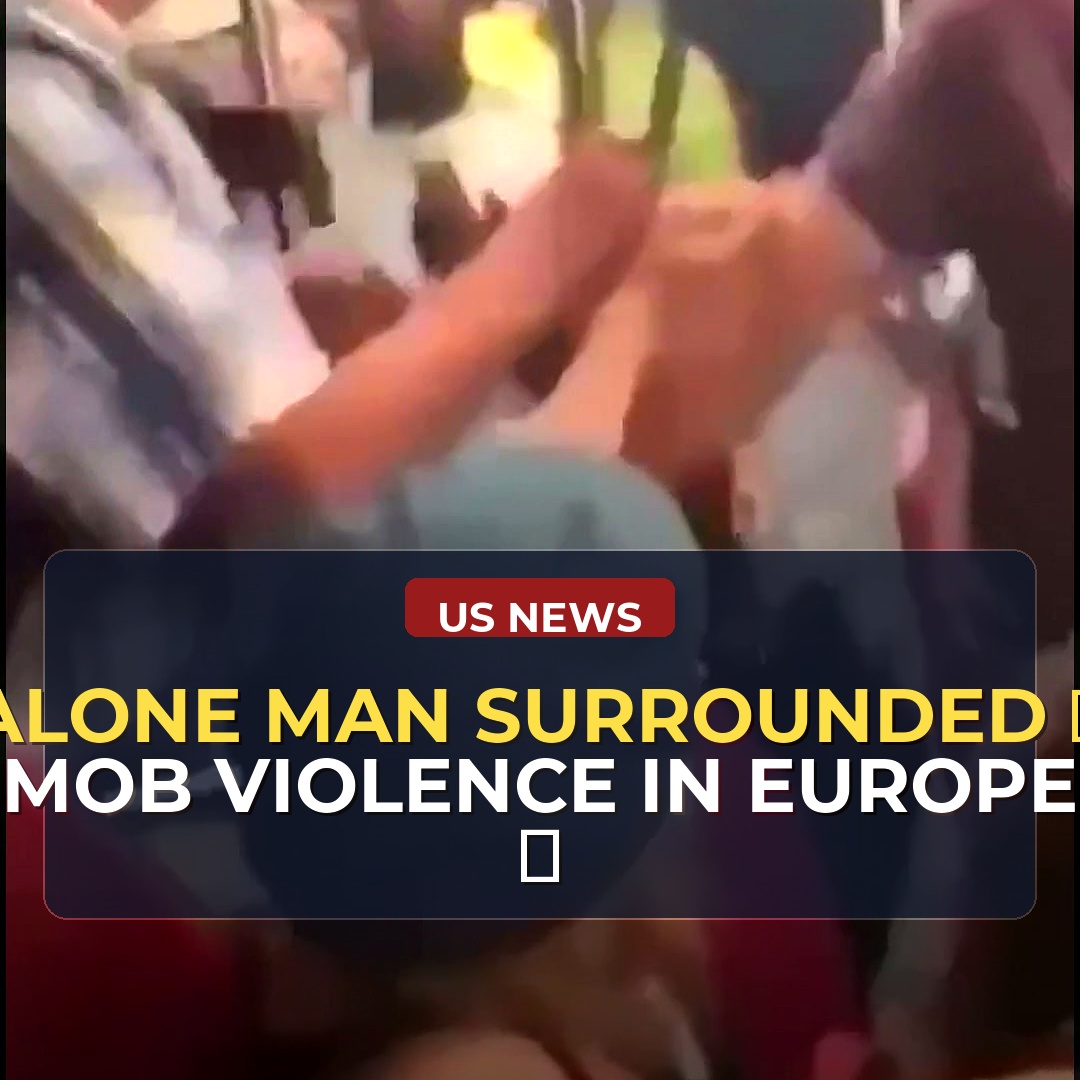
Viral Video Allegedly Showing Man Attacked by Group in Netherlands Reignites Immigration Debate
A poorly documented clip with explosive claims is fueling familiar battles over migration, integration, and public safety — and exposing how quickly raw footage becomes political ammunition.

A chaotic video circulating on social media has set off a fresh round of angry debates about immigration in Europe. The clip, which has been shared widely across platforms, allegedly shows a Dutch man surrounded and repeatedly struck by a group of immigrants while he appears to be doing nothing to provoke the confrontation. The footage is grainy, the context is thin, and the claims attached to it are anything but neutral.
According to the source that posted the video, the incident took place in the Netherlands, with the caption describing a lone Dutch man “completely alone, surrounded by immigrants” who “gang up on him” and beat him “repeatedly, violently.” The audio captures shouting, overlapping voices, and a series of “What? What? What?” exchanges, followed by an onlooker exclaiming, “Oh my god!” No independent verification, location, date, or police report has been provided.
That lack of verification has done little to slow the video’s spread. Within days, it became a rallying point for those who argue that mass immigration has created unsafe conditions in European cities, and a warning flag for those who see the clip as yet another example of viral misinformation being used to stoke fear.

The Netherlands is no stranger to these tensions. The country has spent years wrestling with how to manage immigration while maintaining social cohesion. Successive governments have introduced stricter asylum rules, language requirements, and integration tests, yet public frustration has continued to simmer. A video like this one does not simply appear in a vacuum — it lands in a society already deeply polarized over who belongs, who is safe, and who is being left behind.
For those who share the clip, the message is straightforward. They argue it shows what happens when immigrant communities are allowed to act with impunity. They point to statistics on youth crime, reports of gang activity, and neighborhoods where, in their view, established residents feel increasingly outnumbered. For them, this video is not an isolated incident but evidence of a broader failure of political leadership.
“Why do we have to live like this?” the original caption asks. That question resonates with a segment of the public that feels unheard by mainstream politicians. They want tougher policing, stricter deportation rules, and schools and public spaces that prioritize order and security. To those viewers, the video is disturbing but not surprising.

But skeptics and fact-checkers caution against drawing sweeping conclusions from a clip with no verifiable details. They note that viral videos frequently appear without proper context, and that pointing at “immigrants” as a group based on raw footage can fuel prejudice and even violence. They argue that the actual incident, whatever it was, may have involved a dispute or circumstances that the video does not show.
Their concern is reinforced by a track record of misleading clips. In recent years, numerous videos have circulated online claiming to show crimes committed by immigrants, only to be debunked or revealed as mislabeled, outdated, or staged. Each debunked case does not undo the harm already done, especially when the footage has been shared thousands of times before the truth catches up.
The speed of the reaction also reflects how social media algorithms reward outrage. A violent clip with a provocative caption performs exceptionally well in engagement metrics, regardless of whether the claims hold up. By the time any correction or additional context emerges, the emotional impact has already been absorbed and politicized.

Across Europe, governments are wrestling with the same dilemma. In France, Germany, Sweden, and Belgium, populist parties have built electoral momentum on the belief that established elites are ignoring the realities of crime and cultural change. At the same time, civil rights organizations warn that linking immigration to criminality based on anecdotal footage is both inaccurate and dangerous.
For American readers, the pattern is painfully familiar. The same arguments playing out in the Netherlands mirror the debates taking place in the United States over border security, crime statistics, and the reliability of viral content. A single video can ignite a firestorm online, shaping public opinion long before the facts are known.
The video also raises uncomfortable questions about perception and lived experience. Even if this specific clip lacks context, the feelings it evokes are real. Many residents in European cities report witnessing petty crime, aggressive behavior, or cultural clashes in their neighborhoods. Whether those experiences are statistically representative or personally selective, they shape how voters respond to politics and policy.
Law enforcement has a role to play as well. If the attack in the video did occur, identifying the victim and locating the perpetrators would be necessary steps. If it did not, or if the details are misleading, officials and media organizations share a responsibility to clarify what actually happened. Silence leaves the narrative to the loudest voices.
The deeper issue is one of trust. When institutions fail to communicate clearly, viral content rushes into the vacuum. People are left to choose between what officials tell them and what they can see with their own eyes, even when what they see is incomplete. That erosion of confidence does not stay contained to one country or one platform.
What the video ultimately demonstrates is how fragile public discourse has become. It is not simply a clip of an alleged assault — it is a reflection of how far apart people already are in their understanding of immigration, safety, and fairness. One side sees a society losing control. The other sees a hostile narrative weaponized for political gain. Both sides claim the same footage as proof.
Until more details emerge, the video will remain a clash of interpretations rather than a settled fact. But the lesson for ordinary citizens is already clear: in an environment where anyone can broadcast anything, knowing what to trust demands more than a quick share. The consequences of getting that wrong extend far beyond a single screen, reaching the way communities are governed, policed, and ultimately, how they live together.