A Lighthearted Post About Poland’s Safe Streets Has Ignited a Heated Conversation About Community Values, Diversity, and What Makes Neighborhoods Feel Secure — With No Easy Answers Emerging
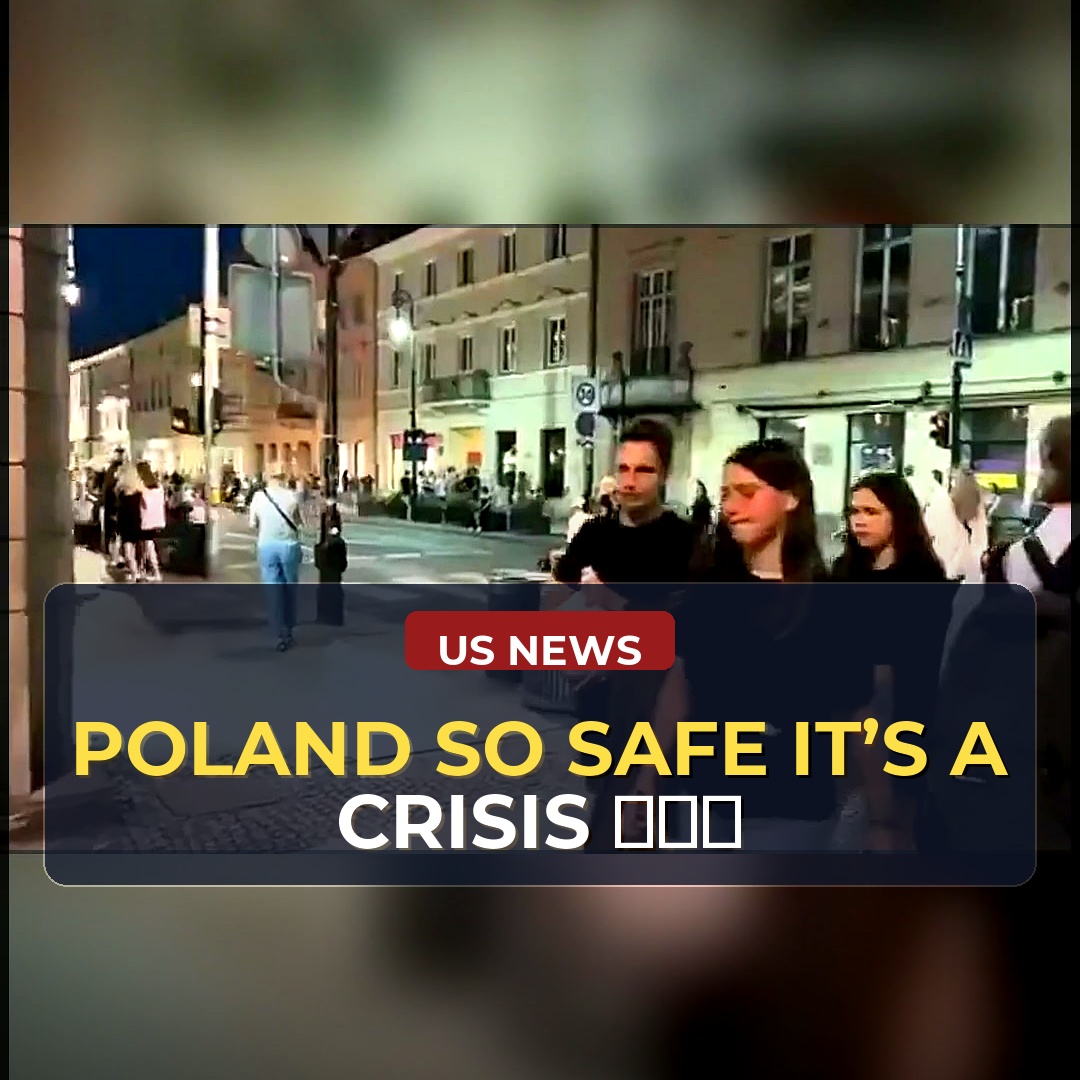
A Sarcastic Tweet About Poland’s Safe Streets Has Sparked a Heated Debate Over Diversity and Community Trust
The internet joke about “praying for Poland” has become the latest flashpoint in a long-running argument over what really makes neighborhoods safe — and it hits close to home for many Americans.

A single sarcastic post about Poland has reignited a fierce online battle over immigration, social cohesion, and the elusive question of what truly makes a community safe. The tweet, which quickly racked up tens of thousands of shares, urged followers to “please pray for Poland” over the “devastating news” that its streets are reportedly so clean and safe that women and children can still walk alone at night.
The author’s tone is unmistakably mocking. The punchline isn’t really about Poland at all — it’s a jab at the idea that diversity is an unqualified social strength. By pretending to mourn a country that hasn’t embraced mass immigration, the post mocks the notion that cultural transformation is always a net positive for ordinary families.
What began as internet irony, though, has quickly turned into a serious culture-war flashpoint. Commentators on both sides of the political spectrum have seized on the tweet to argue about crime statistics, demographic change, and whether Western nations are drifting away from what once made their neighborhoods feel secure.

On its surface, the factual claim is hard to dispute. Poland consistently ranks among the safest countries in the European Union. According to Eurostat data, the nation’s homicide rate is among the lowest in Europe, and violent street crime remains relatively rare compared to many Western European capitals. Polish nightlife districts and suburban sidewalks are widely described by travelers and residents alike as notably calm, even late in the evening.
Gdansk, Krakow, Warsaw and other Polish cities frequently appear on lists of Europe’s safest urban destinations, and the country’s police force maintains a visible and trusted presence in most communities. For many Polish families, the experience of letting children walk to a friend’s house after dark or seeing women jog alone at night is simply part of everyday life.
The argument begins when people try to explain why that is. The tweet’s author and its thousands of supporters suggest the answer lies in Poland’s ethnic and cultural homogeneity. Poland remains one of the most demographically uniform countries in Europe, with a population that is overwhelmingly ethnic Polish and Catholic. Supporters of the tweet’s message argue that shared language, shared customs, and a strong sense of national identity create a foundation of trust that makes crime harder to hide and social disorder less likely to take root.
Critics of the viral post counter that the argument is a lazy oversimplification, and they point to a different set of factors. Poland’s economic transformation since the fall of communism, its strong family structures, its strict gun laws, and the dampening effect of decades of authoritarian rule on organized street crime all complicate the narrative, they argue. In this view, the tweet reduces complex social realities to a tidy slogan that flatters a particular political worldview without doing the hard work of examining actual causes.
Some social scientists have also chimed in, noting that the relationship between diversity and social trust is far more complicated than either side in the internet argument acknowledges. The late Robert Putnam, whose research on American communities found that people in more ethnically diverse areas often reported lower levels of trust in their neighbors, remains a favorite citation among those who see the Polish tweet as a useful provocation. But other scholars have challenged Putnam’s findings, arguing that income inequality, housing instability,