Black Woman Sparks Outrage with Claims that White People Lack Talent and Steal from Black People – Did she go too far?
Racial Tensions Sparked by Controversial Statements on White Culture
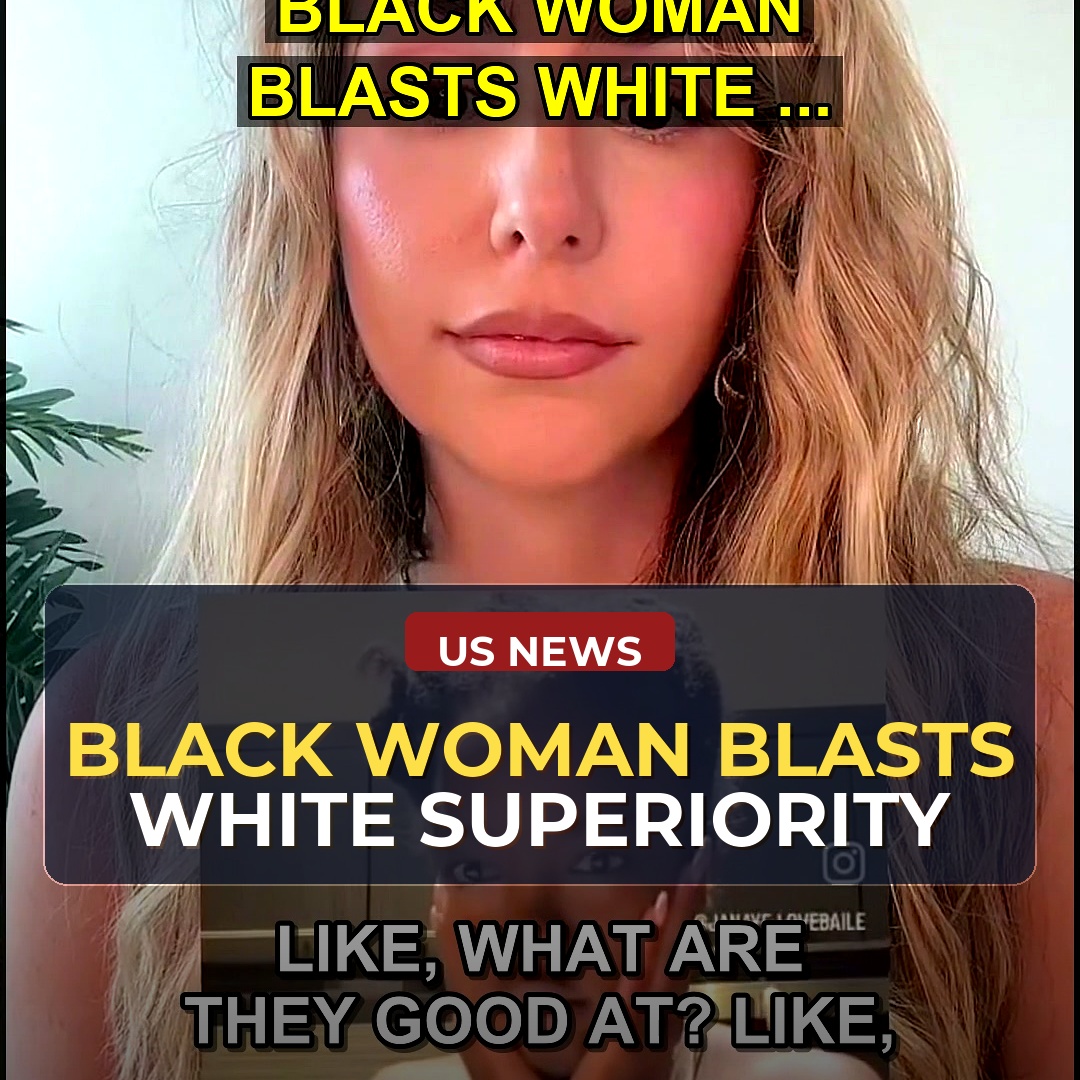
A recent video has ignited a heated debate on social media, with a black woman questioning the cultural contributions and talents of white people, sparking outrage and defenses from various quarters.
A video that has been circulating on social media platforms features a black woman posing a provocative question: “What is white people’s talent?” She goes on to suggest that if one were to strip away the cultural achievements that white people have acquired through historical appropriation, there would be little left to showcase as uniquely their own. This statement has been met with a barrage of responses, ranging from outrage and indignation to thoughtful reflections on the complexities of cultural identity and historical context.
The woman’s argument hinges on the notion that many of the cultural and technological advancements attributed to white people have, in fact, been borrowed or stolen from other cultures, particularly black cultures. She questions the authenticity of white cultural identity, implying that without these borrowed elements, white culture would lack significant depth or innovation. This perspective has resonated with some who feel that historical injustices and cultural appropriation have indeed played a significant role in shaping the modern world.
A sign highlighting the issue of cultural appropriation
On the other hand, many have come to the defense of white culture, pointing out numerous achievements and contributions that are uniquely Western or have originated from white societies. For instance, the architectural feats of the Colosseum, the Pantheon, Gothic cathedrals like Notre Dame, and iconic structures such as the Eiffel Tower and the Sagrada Familia are cited as examples of white cultural and technological prowess. Additionally, inventions like the printing press and the steam engine are highlighted as fundamental to the development of the modern world.
Proponents of white cultural achievements argue that these contributions stand on their own merit, regardless of the complex and often fraught history of cultural exchange and appropriation. They suggest that acknowledging the achievements of one culture does not diminish the value of another and that the richness of human civilization is the result of diverse contributions across different cultures and epochs.
The controversy has also sparked a broader discussion on the nature of cultural identity, the impact of historical appropriation, and the challenges of navigating these complex issues in the present day. It raises questions about how societies should acknowledge and learn from their past, how to appreciate cultural achievements without ignoring their problematic contexts, and how to foster a more inclusive understanding of cultural heritage.
People from different cultures engaging in a traditional dance exchange
At the heart of this debate is the tension between recognizing and respecting the diverse cultural achievements of humanity, while also confronting the darker aspects of history, such as colonialism, slavery, and cultural appropriation. It is a delicate balance to strike, as societies seek to celebrate their unique cultural identities without glossing over the injustices of the past or ignoring the contributions of marginalized groups.
For many, this controversy serves as a reminder of the ongoing struggle for racial equality and understanding. It highlights the need for open and honest dialogue about the complexities of cultural identity, the legacy of historical injustices, and the path towards a more inclusive and equitable society. The debate, while contentious, reflects a deeper societal quest for truth, reconciliation, and mutual respect.
As the discussion unfolds, it becomes clear that the issue at hand is not merely about the talents or cultural achievements of one racial group over another. Rather, it is about how societies choose to acknowledge, learn from, and build upon their complex histories, and how they strive to create a future that values and celebrates the diversity of human culture in all its forms.
The role of social media in amplifying such debates cannot be overlooked. Platforms that were once seen as mere tools for social interaction have become powerful arenas for discussing, debating, and sometimes inflaming societal issues. The rapid dissemination of information, coupled with the anonymity and immediacy of online interactions, can both facilitate meaningful dialogue and perpetuate divisiveness.
A screenshot of a heated online discussion
Ultimately, the challenge lies in navigating these conversations with empathy, understanding, and a commitment to truth. It requires acknowledging the validity of different perspectives, even when they are controversial or uncomfortable, and engaging with them in a spirit of constructive dialogue. Only through such efforts can societies hope to bridge the divides that separate them and work towards a more harmonious and inclusive future.
In conclusion, the controversy sparked by the question of white people’s talent reflects deeper societal tensions and complexities. It underscores the need for a nuanced understanding of cultural identity, historical context, and the ongoing quest for racial equality and justice. As American society continues to grapple with these issues, the hope remains that through open dialogue, mutual respect, and a willingness to confront the past, a brighter, more inclusive future can be forged for all.