Headline: Florida Cabinet’s Designation of Terrorist Groups Leaves Questions on Affiliations and Implications for State Policy
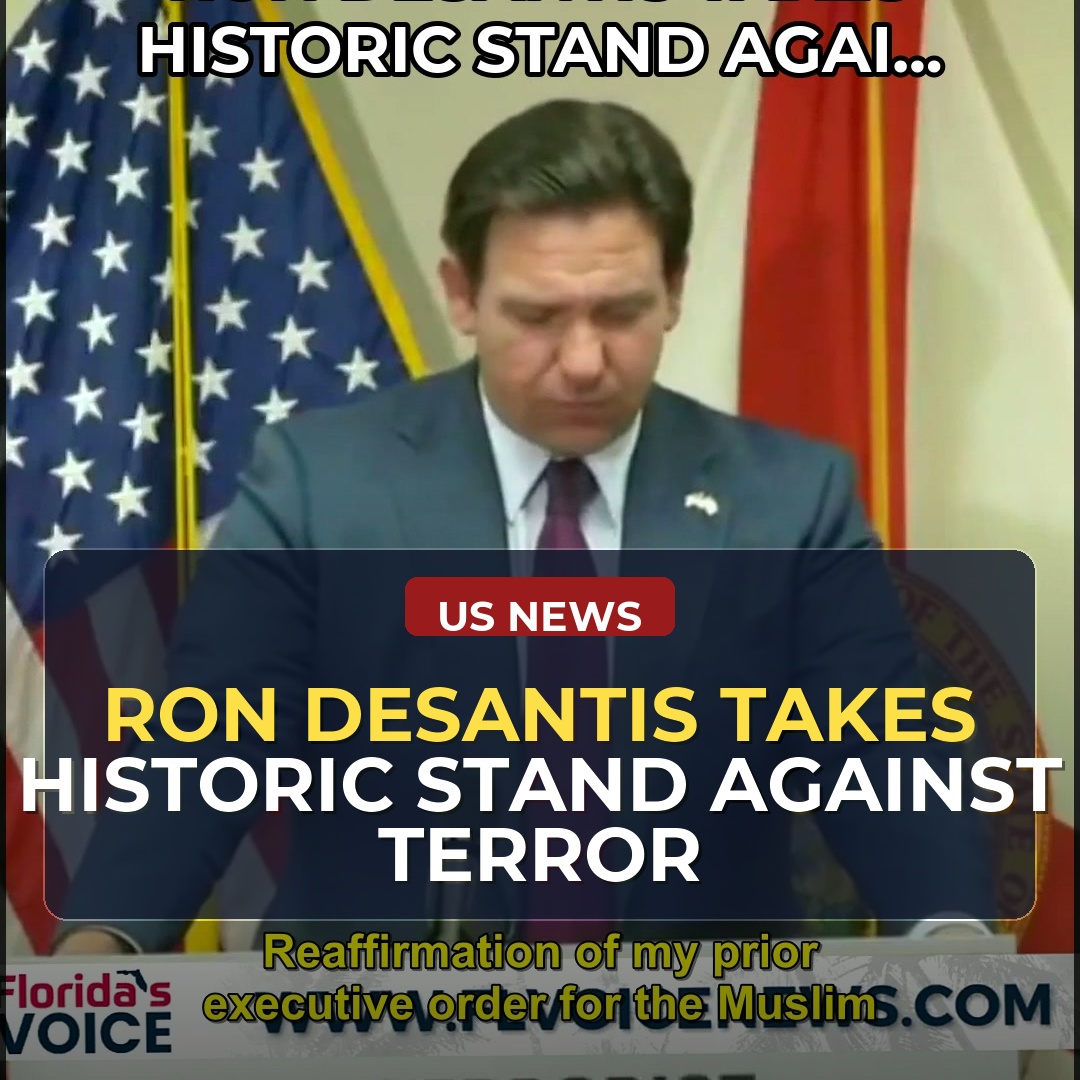
Florida Designates ANTIFA, Muslim Brotherhood, and CAIR as Terrorist Organizations
Governor Ron DeSantis’ Decision Sparks Debate on Terrorism, Free Speech, and National Security

In a move that has sent shockwaves across the nation, Florida Governor Ron DeSantis has announced that the Florida Cabinet will officially designate ANTIFA, the Muslim Brotherhood, and the Council of American-Islamic Relations (CAIR) as terrorist organizations under a new law that took effect today. This decision has sparked intense debate on issues of terrorism, free speech, and national security, with many questioning the implications of such a designation on civil liberties and community relations.
The announcement is a reaffirmation of Governor DeSantis’ prior executive order targeting the Muslim Brotherhood and CAIR, with the addition of ANTIFA and several groups affiliated with drug cartels. According to Governor DeSantis, this move aims to counter the threats posed by these organizations to the safety and security of Florida’s citizens. However, critics argue that such designations could lead to the suppression of free speech and the targeting of specific communities.
The controversy surrounding this decision is multifaceted, involving concerns over the definition of terrorism, the impact on civil liberties, and the potential for xenophobia and Islamophobia. While supporters of the move argue that it is necessary to protect Floridians from the alleged threats posed by these groups, opponents claim that it could lead to the marginalization of already vulnerable communities and the erosion of trust in law enforcement.

ANTIFA, which stands for “anti-fascist,” is a loose network of groups and individuals who identify as anti-fascist and have been involved in various protests and counter-protests across the United States. While some view ANTIFA as a necessary counterbalance to far-right extremism, others see the group as a source of violence and disorder. The designation of ANTIFA as a terrorist organization has sparked particular controversy, with many arguing that it could lead to the criminalization of peaceful protest and the suppression of dissenting voices.
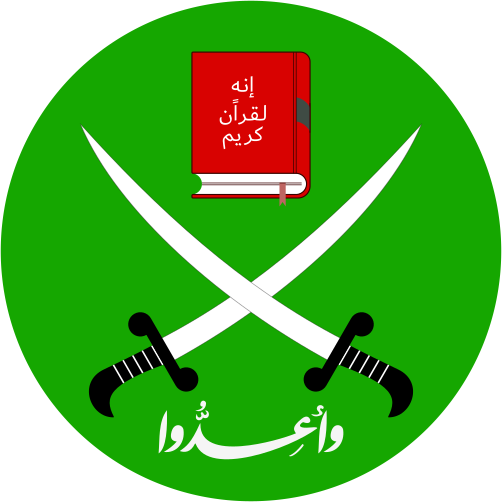
The Muslim Brotherhood, on the other hand, is a transnational Islamist organization that has been accused of promoting extremist ideologies and supporting terrorist groups. However, the organization also has a significant presence in the United States, where it has been involved in various community and advocacy efforts. The designation of the Muslim Brotherhood as a terrorist organization has raised concerns among some Muslim American communities, who fear that it could lead to increased scrutiny and discrimination.
CAIR, which is one of the largest Muslim civil rights and advocacy organizations in the United States, has also been designated as a terrorist organization by the Florida Cabinet. CAIR has been a vocal critic of Islamophobia and xenophobia, and has worked to promote greater understanding and acceptance of Muslim Americans. However, the organization has also faced criticism and controversy, with some accusing it of having ties to extremist groups.
The decision to designate these organizations as terrorist groups has sparked a national debate on the balance between national security and civil liberties. While some argue that such designations are necessary to protect Americans from the threats posed by these groups, others claim that they could lead to the erosion of trust in government and the suppression of free speech. As the debate continues to unfold, it is clear that the implications of this decision will be far-reaching, with significant consequences for communities across the United States.
The role of government in designating terrorist organizations is also a subject of controversy, with some arguing that such decisions should be made by the federal government rather than individual states. The Florida Cabinet’s decision has raised questions about the potential for inconsistent and biased designations, and the need for greater transparency and accountability in the process.
As the nation grapples with the complexities of terrorism, extremism, and national security, the designation of ANTIFA, the Muslim Brotherhood, and CAIR as terrorist organizations serves as a stark reminder of the challenges and trade-offs involved. While the need to protect Americans from harm is undeniable, it is equally important to ensure that such efforts do not come at the expense of civil liberties, community trust, and the principles of justice and equality that underpin American society.
In conclusion, the designation of these organizations as terrorist groups is a complex and multifaceted issue, with significant implications for national security, civil liberties, and community relations. As Americans, it is essential that we approach this issue with nuance, empathy, and a deep commitment to the values of justice, equality, and freedom that have always defined our nation.

Ultimately, the decision to designate ANTIFA, the Muslim Brotherhood, and CAIR as terrorist organizations raises fundamental questions about the kind of society we want to build and the values we want to uphold. As we move forward, it is crucial that we engage in open and honest dialogue, listening to diverse perspectives and working towards solutions that balance national security with civil liberties, and that promote greater understanding, acceptance, and inclusion for all.