A Senate Hearing Exchange Raises Questions About Homelessness Data, HUD Policy, and Federal Accountability
Gillibrand and HUD Secretary Scott Turner Clash in Emotional Homelessness Hearing
A tense Senate exchange over homelessness, vouchers, and federal housing policy turned personal after Turner said the crisis had touched his own family.

A Senate hearing over housing policy turned sharply emotional after Sen. Kirsten Gillibrand challenged HUD Secretary Scott Turner on homelessness, delayed data, and whether the department’s strategy is producing real results for families in crisis.
The exchange gained attention because it moved beyond the usual language of budgets and federal programs. Gillibrand did not only ask about numbers. She pressed Turner on whether he understood what homelessness feels like for children and families who are living through it right now.
At one point, Gillibrand asked whether Turner knew what it was like to be a homeless little girl who had only a Girl Scout troop for other homeless girls as a source of consistency. Turner responded that he did understand, saying homelessness had happened in his own family.
That answer changed the tone of the moment. What could have remained a standard oversight hearing became a public collision between two different ways of talking about homelessness: one focused on urgency, immediate aid, and measurable results; the other focused on reform, accountability, and the argument that the current model has not worked well enough.
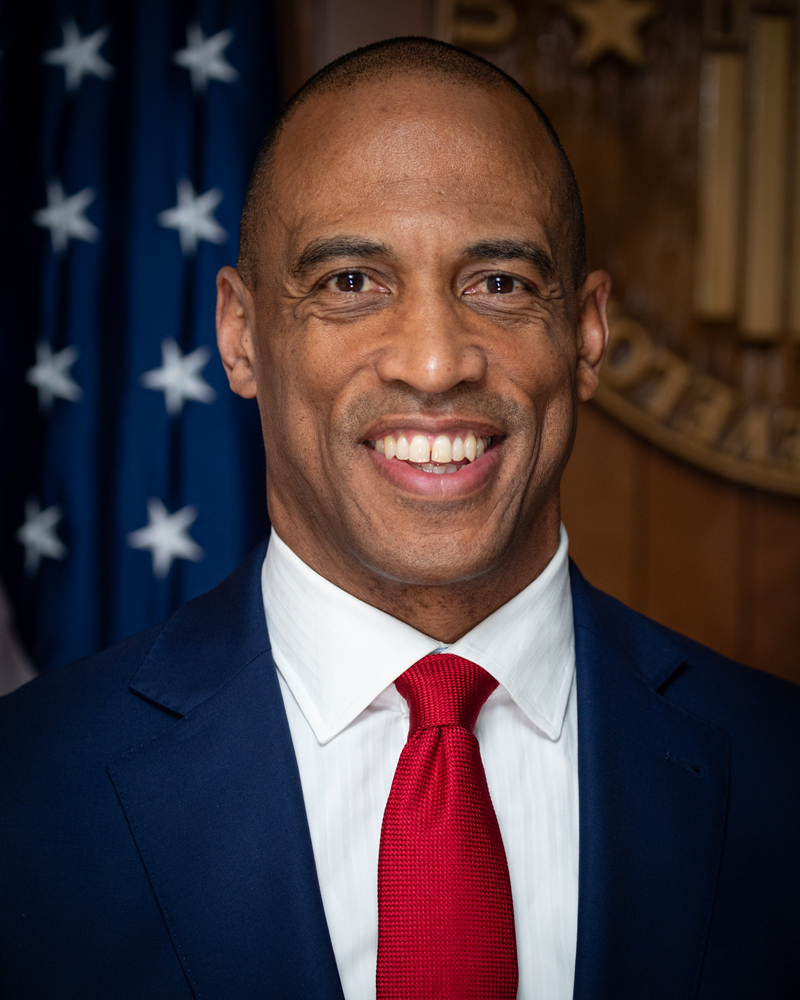
Gillibrand’s argument was blunt: people facing homelessness cannot wait for political blame-shifting. She pressed Turner to explain his own record, saying that families in New York and across the country need results now, not excuses about past administrations.
Turner pushed back by arguing that record levels of federal spending had still coincided with record homelessness. In his view, Washington should not measure compassion only by how much money it spends. It should measure success by whether people are actually moving out of homelessness and into stable lives.
That disagreement sits at the center of one of America’s hardest policy fights. Supporters of the Housing First model argue that stable housing is the foundation people need before they can address employment, mental health, addiction, or family instability. Critics argue that housing support without stronger accountability and wraparound expectations can leave the underlying crisis unresolved.
The hearing made that divide visible. Gillibrand wanted proof that HUD’s approach was working and wanted clear answers on tenant protection vouchers. Turner said his team would take care of tenants in need, but Gillibrand pressed for more specific guidance and commitments.

The strongest part of the exchange was that both sides claimed to be speaking for vulnerable Americans. Gillibrand framed the issue around families who are suffering today. Turner framed it around the failure of previous systems to reduce homelessness despite major public investment.
That is why the moment spread so quickly. It was not just a partisan back-and-forth. It was a clash over what accountability should look like when the subject is human suffering.
For Gillibrand, accountability means showing the data, protecting vouchers, and giving families immediate help before they fall deeper into crisis. For Turner, accountability means admitting that federal housing programs need reform if spending keeps rising while homelessness remains high.
The personal element made the exchange even more powerful. Turner had previously spoken during his confirmation process about his family helping a homeless veteran uncle, saying his family took him in and surrounded him with support. That background gave his answer emotional weight, even as Gillibrand continued to argue that personal experience does not replace measurable policy results.

Behind the viral moment is a much larger housing crisis. Across the United States, rising rents, shelter shortages, limited affordable housing supply, mental health challenges, and family instability have put pressure on local governments and federal agencies. Homelessness is not one problem with one cause. It is a collision of economic, social, medical, and policy failures.
That complexity is exactly why hearings like this become so tense. A senator wants immediate answers. A cabinet secretary wants room to change direction. Families need help faster than Washington can debate. Taxpayers want to know whether billions of dollars are being used effectively.
There is also a political risk for both sides. Democrats can argue that reducing support or delaying guidance leaves vulnerable families exposed. Turner and his allies can argue that defending the old model ignores obvious failures. Each side believes the other is missing the most important part of the crisis.

The hearing showed how difficult it is to talk about homelessness without reducing it to slogans. “Spend more” is not enough if programs fail to move people into stability. “Reform the system” is not enough if families lose support while reforms are being debated.
That is why Gillibrand’s question landed so strongly. She brought the issue back to a child’s lived experience. Turner’s response landed because he rejected the idea that he was detached from the pain of homelessness. The clash was not simply about who cared more. It was about whose plan can actually work.
In the end, the exchange revealed the central challenge facing federal housing policy: America needs both compassion and proof. It needs urgency, but it also needs results. It needs funding, but it also needs a system that can show families are becoming safer, more stable, and less likely to return to homelessness.
For the people living through housing insecurity, the winner of the hearing matters far less than what happens next. The real test will not be a viral clip, a press release, or a sharp exchange in a committee room. The real test will be whether HUD, Congress, states, and cities can turn outrage into housing people can actually live in.